FrancoisNeo
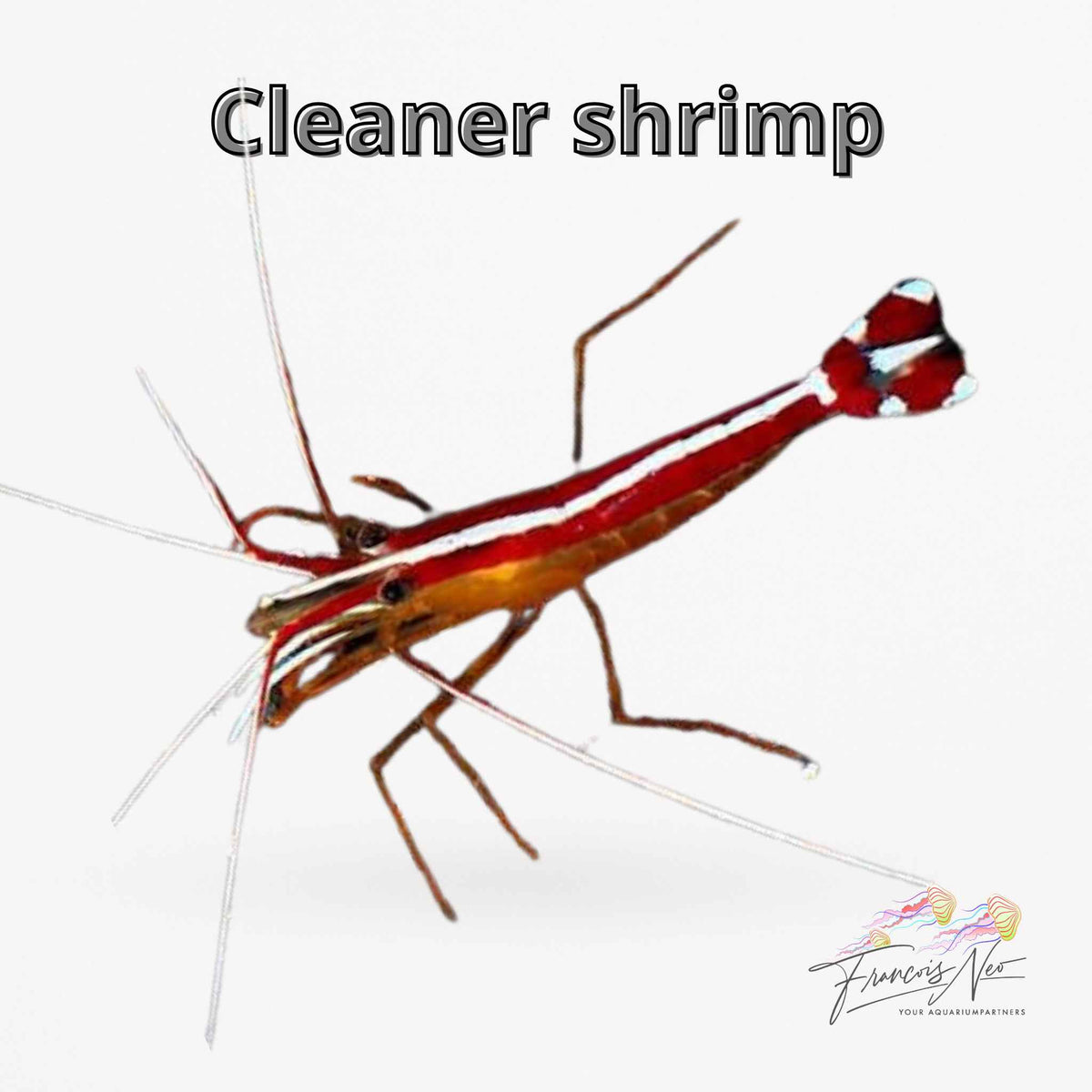
Cleaner Shrimp – Lysmata amboinensis
Cleaner Shrimp – Lysmata amboinensis
Couldn't load pickup availability
Cleaner Shrimp – Lysmata amboinensis
The Cleaner Shrimp is one of the most recognizable and useful ornamental shrimp in the marine aquarium hobby.
Known for its bright red and white coloration and its natural cleaning behavior, Lysmata amboinensis may establish cleaning stations where fish voluntarily approach to have parasites, dead skin and debris removed.
Peaceful, active and generally reef-safe, it is an excellent addition to many community reef aquariums.
Key Features
-
Scientific name: Lysmata amboinensis
-
Common name: Cleaner Shrimp
-
Also known as: Scarlet Skunk Cleaner Shrimp
-
Temperament: Peaceful
-
Reef safe: Yes
-
Care level: Easy to moderate
-
Adult size: Approximately 2–3 inches
-
Minimum aquarium size: 20 gallons
-
Diet: Omnivore / scavenger
-
Water temperature: 75–80°F
-
Salinity: 1.023–1.026 specific gravity
-
Recommended pH: 8.1–8.4
Aquarium Care
Cleaner Shrimp do best in stable, established marine aquariums with plenty of rockwork and shelter.
They often remain visible during the day and may set up a cleaning station where compatible fish approach them.
Like most marine invertebrates, they are sensitive to sudden changes in salinity and water chemistry. Slow acclimation is recommended.
Avoid copper-based medications in any aquarium containing shrimp or other invertebrates.
Feeding
Cleaner Shrimp are opportunistic omnivores and scavengers.
Offer a varied diet including:
-
Frozen mysis shrimp
-
Brine shrimp
-
Small pieces of marine foods
-
High-quality sinking foods
-
Leftover fish food
Although they may clean fish, they should still be fed regularly.
Reef Compatibility
Cleaner Shrimp are generally considered reef-safe and are compatible with most corals and peaceful reef fish.
Avoid housing them with large predatory fish that naturally prey on shrimp or other crustaceans.
Francois Neo AquaStudio Selection
Our livestock is selected with attention to health, activity, body condition, feeding response and overall aquarium suitability.
Availability may vary depending on current livestock inventory.
Individual size and coloration may vary.
Share